
How to Treat Strawberry Legs and Keratosis Pilaris: A Complete Step-by-Step Guide
Written by Grace Reyes — Independent skincare researcher who reads ingredient labels obsessively so you don’t have to.
If you notice tiny dark spots on your legs, you might have strawberry legs. Small, rough bumps on your arms usually point to Keratosis Pilaris. Both skin conditions are extremely common in everyday body care. They are completely harmless to your overall physical health.
However, dealing with uneven skin texture can feel quite frustrating. Understanding the root causes helps you smooth your skin safely. Proper care prevents unwanted irritation to your natural skin barrier.
Strawberry Legs vs Keratosis Pilaris: Understanding the Differences
These conditions look very similar at a glance. However, their underlying biological causes are actually quite different.
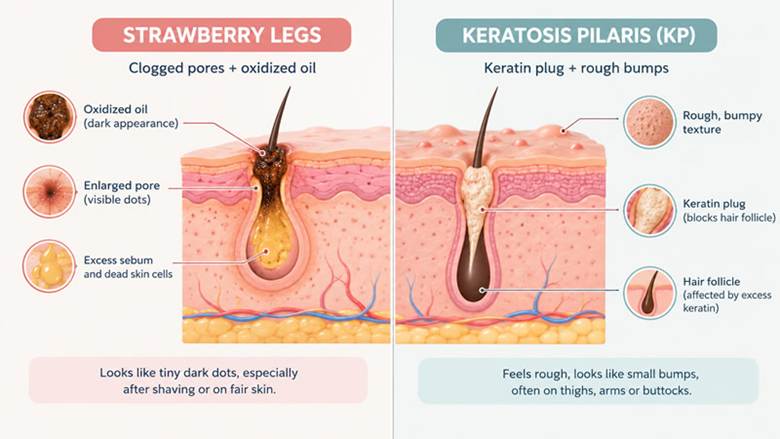
Strawberry legs get their name from dark, pitted spots. This happens when enlarged pores or hair follicles trap oil. Dead skin and surface bacteria also collect inside these open pores. Shaving opens these clogged pores to the surrounding air. The trapped debris then oxidises and turns a dark colour.
Keratosis Pilaris is often referred to as chicken skin. KP is a harmless, genetically driven condition. It happens when excess keratin builds up inside hair follicles. Keratin is a natural protective protein found in human skin. The protein plugs up follicle openings, creating small, rough bumps.
| Feature | Strawberry Legs | Keratosis Pilaris (KP) |
| Primary Cause | Clogged, oxidised pores after shaving | Keratin protein buildup in hair follicles |
| Main Location | Legs and thighs | Back of arms, thighs, and cheeks |
| Skin Appearance | Dark, tiny dots resembling seeds | Small, rough, flesh-colored or red bumps |
| Best Ingredient | Salicylic Acid (BHA) to unclog pores | Glycolic Acid (AHA) and Urea to dissolve keratin |
Primary Causes of Persistent Body Bumps
Dull shaving blades are a major cause of skin irritation. Old razors pull on delicate hair and inflame hair follicles. Shaving on dry skin makes this inflammation much worse. Inadequate exfoliation leads to a buildup of dead skin. These dead skin cells block surface pores over time. Trapped growing hairs then cause tiny, inflamed bumps on legs.
Chronically dry skin makes Keratosis Pilaris bumps look much worse. Moisture loss causes keratin plugs to harden significantly. Hardened plugs create extra friction, redness, and rough skin texture. Shaving on dry skin aggravates skin inflammation and leads to a damaged skin barrier.
Harsh physical scrubs cause micro-tears in fragile skin layers. Abrasive walnut scrubs aggravate existing follicle inflammation very quickly. Gentle care is always necessary for smoothing rough body texture.
A Proven Step-by-Step Body Care Protocol
Switching to chemical exfoliants is the most effective treatment step. Avoid physical body scrubs that scratch your outer skin layer. Instead, use leave-on lotions containing Salicylic Acid or Glycolic Acid. Salicylic Acid dissolves deep pore oil very efficiently. Glycolic Acid breaks down stubborn keratin plugs on the surface.
Upgrading your shaving technique protects vulnerable skin follicles. Always shave at the very end of a warm shower. Warm water softens coarse body hair for a smooth shave. Use a fresh, sharp razor with a rich shaving cream.

Always shave carefully in the direction of natural hair growth. Just like following a proper skincare layering order for your face, applying body treatments in the correct sequence ensures maximum absorption.
Moisturizing immediately after showering seals in vital hydration. Apply a thick, fragrance-free body lotion within three minutes. Look for hydrating formulas with Urea, Ceramides, or Glycerin. If you are experiencing bumpy texture on your body rather than facial breakouts, learn how to treat strawberry legs and keratosis pilaris effectively.
Urea softens tough keratin plugs while Ceramides repair damaged barriers. Wearing loose-fitting clothing reduces unnecessary skin friction. Tight leggings and jeans rub against open pores all day. Friction pushes surface bacteria deeper into sensitive hair follicles. Choose breathable cotton fabrics to keep your skin calm and clear.
Frequently Asked Questions
Can Keratosis Pilaris be cured completely?
No, KP cannot be cured permanently due to genetic factors. However, consistent chemical exfoliation keeps the bumps smooth and flat.
How long does it take to see smoother skin?
You will notice softer skin within two to four weeks. Continuing your daily hydration routine prevents keratin plugs from returning.
Is dry brushing helpful for strawberry legs?
Gentle dry brushing helps sweep away loose surface dead skin cells. Always brush lightly to avoid causing extra redness or skin irritation.
Does hot water make body bumps worse?
Hot water strips natural oils and worsens overall skin dryness. Use lukewarm water during showers to keep your barrier protected.
Can I use facial exfoliants on my body bumps?
Yes, facial AHA and BHA serums work well on body bumps. However, dedicated body lotions are usually more affordable for daily use.
Disclaimer: The content on The Glow with Grace is for educational and informational purposes only. It is not intended as a substitute for professional medical or dermatological advice.
Explore more skincare guides on The Glow with Grace homepage.