Physical vs Chemical Sunscreen: Which One Is Best for Your Skin?
Written by Grace Reyes — Independent skincare researcher who reads ingredient labels obsessively so you don’t have to.
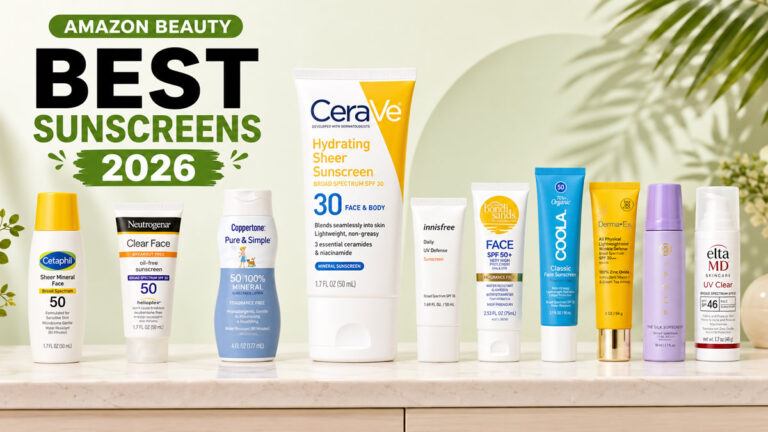
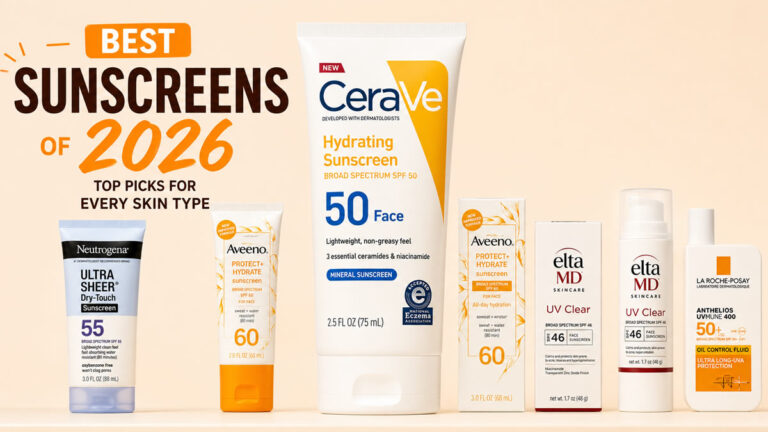
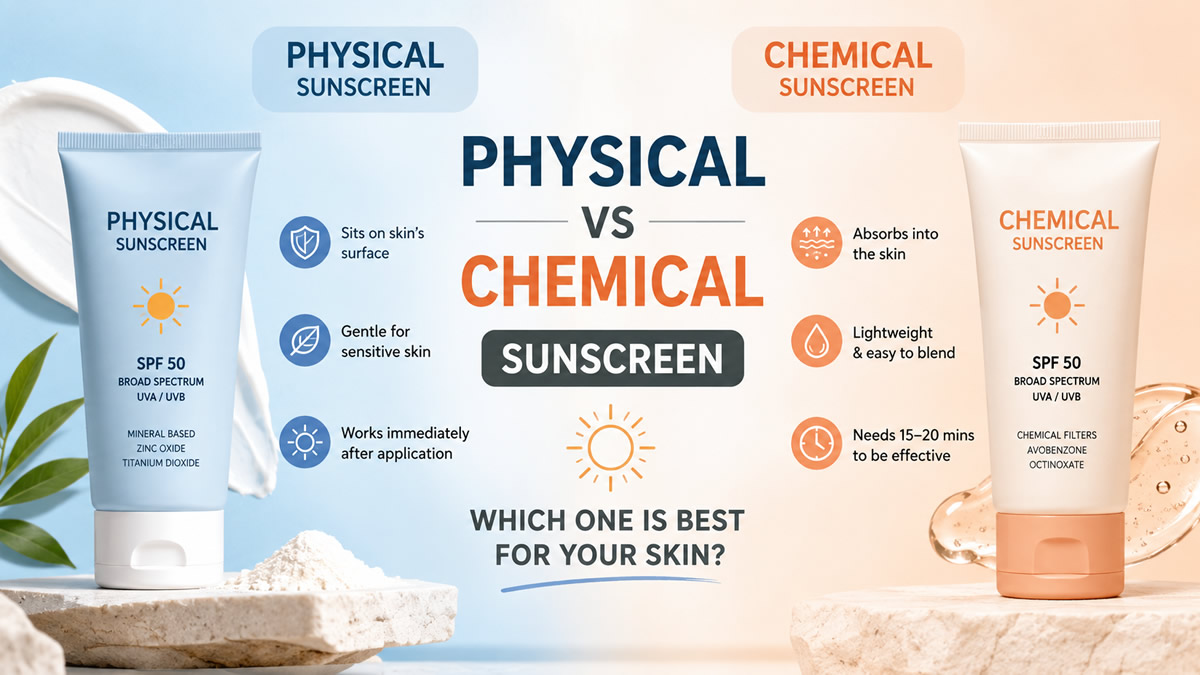
When choosing daily UV protection, understanding Physical vs Chemical Sunscreen is the most critical decision for your skin’s health and appearance. Both mineral and chemical active ingredients protect your facial skin from harmful ultraviolet radiation. They function in completely different ways, feature distinct textures and suit different skin concerns.
What Is Physical (Mineral) Sunscreen?
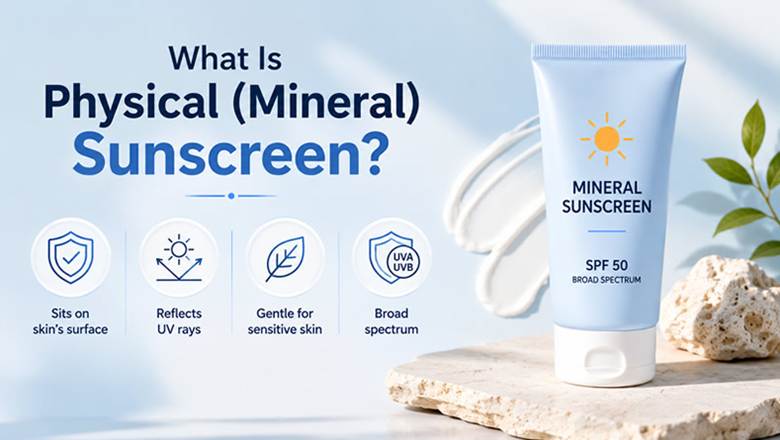
Physical sunscreen, commonly referred to as mineral sunscreen, relies on active mineral ingredients to form a protective barrier on the outer surface of your skin.
How It Works
Mineral sunscreens sit on top of the skin barrier like a physical shield. They primarily reflect and scatter incoming ultraviolet rays (both UVA and UVB) away from your face before the light can penetrate your deeper dermal layers.
Key Active Ingredients
- Zinc Oxide: Offers broad-spectrum protection against UVA and UVB rays while naturally soothing inflammation and redness.
- Titanium Dioxide: Provides strong protection against UVB rays and short-wave UVA rays, featuring a lightweight mineral feel.
Pros of Physical Sunscreen
- Instant Protection: Starts working immediately upon application without needing time to absorb.
- Soothes Reactive Skin: Highly gentle, making it ideal for rosacea, eczema, and post-procedure skin.
- Non-Comedogenic Potential: Zinc oxide naturally calms acne breakouts and helps regulate excess oil production.
Cons of Physical Sunscreen
- White Cast: Can leave a chalky or white finish, especially on deeper skin tones, unless tinted.
- Thicker Texture: Tends to feel heavier or slightly chalky under makeup.
- Frequent Reapplication Required: Rubs off easily with sweat, water, or friction.
What Is Chemical Sunscreen?
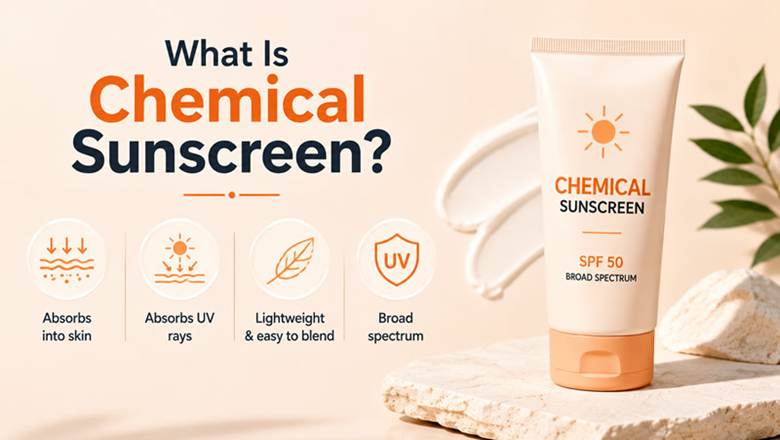
Chemical sunscreens utilise organic (carbon-based) compounds that absorb UV rays directly into the skin, convert the radiation into harmless heat, and release it from the body.
How It Works
Unlike mineral barriers that sit on top of the skin, chemical sunscreen filters absorb into the top layers of the epidermis. When UV rays hit your skin, these chemical filters undergo a chemical reaction to neutralise the rays before they can cause cellular damage or premature ageing.
Key Active Ingredients
- Avobenzone: A powerful filter for broad UVA protection.
- Octisalate and Octocrylene: Help stabilise formulas and enhance water resistance.
- Oxybenzone and Homosalate: Provide strong UVB absorption.
Pros of Chemical Sunscreen
- Invisible Finish: Blends effortlessly without leaving any white cast, making it great for all skin tones.
- Lightweight Textures: Formulated as thin lotions, gels, or fluid serums that wear comfortably under makeup.
- Water-Resistant: Holds up better during outdoor activities, workouts, and swimming.
Cons of Chemical Sunscreen
- Requires Wait Time: Takes 15 to 20 minutes after application to absorb and become fully effective.
- Potential Heat Activation: The heat conversion process can trigger flushing or aggravate heat-sensitive redness.
- Stinging or Irritation: Active chemical filters can sometimes sting sensitive eyes or cause reactions on compromised skin barriers.
Physical vs Chemical Sunscreen: Comparison Breakdown
| Feature | Physical (Mineral) Sunscreen | Chemical Sunscreen |
| Mechanism | Sits on top of skin; reflects UV rays | Absorbs into skin; converts UV rays into heat |
| Wait Time | Works immediately upon application | Requires 15–20 minutes to activate |
| Finish | May leave a white cast (unless tinted) | Completely clear and invisible |
| Best For | Sensitive, reactive, or acne-prone skin | Normal, oily, active, or deeper skin tones |
| Texture | Thicker, rich cream or paste | Lightweight gel, fluid, or lotion |
Which Sunscreen Type Is Best for Your Skin Type?
Choosing between physical and chemical formulas depends largely on your skin profile, environmental triggers, and daily habits.
1. Sensitive or Redness-Prone Skin
If you struggle with sudden reactivity, flushing, or irritation, physical mineral sunscreen is your safest choice. Zinc oxide acts as a skin protectant that calms inflammation without stinging. Pair your SPF with 10 Best Alcohol-Free Toners for Sensitive Skin That Calm Redness for a soothe-and-protect routine.
2. Acne-Prone or Oily Skin
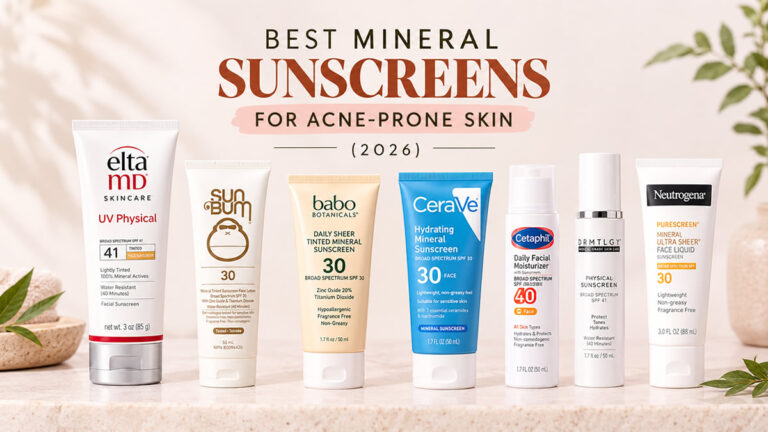
Mineral formulas containing zinc oxide are fantastic for calming active blemishes and controlling shine without clogging pores. If you deal with breakouts, review our curated list of the Mineral Sunscreens for Acne-Prone Skin That Hide Redness to find lightweight, non-greasy options.
3. Dry or Dehydrated Skin
Dry skin profiles can wear either formula, provided it contains nourishing base ingredients like hyaluronic acid, ceramides or glycerin. If your skin feels tight or flaky, apply a rich moisturiser like the Best Face Cream for Dry Skin prior to applying your sunscreen layer.
4. Active Lifestyles & Deep Skin Tones
If you work out outdoors, swim, or dislike the chalky residue of traditional sunscreens, a high-performance chemical sunscreen or a high-end tinted mineral SPF provides smooth, invisible daily coverage.
Next Steps for Your Daily Routine
Mastering sun protection is the single most important step to prevent premature ageing, hyperpigmentation and barrier damage.
- Cleanse Thoroughly at Night: Always wash off your sunscreen completely before bed. For a gentle end-of-day wash, explore the Best Face Wash for Sensitive Skin in the USA.
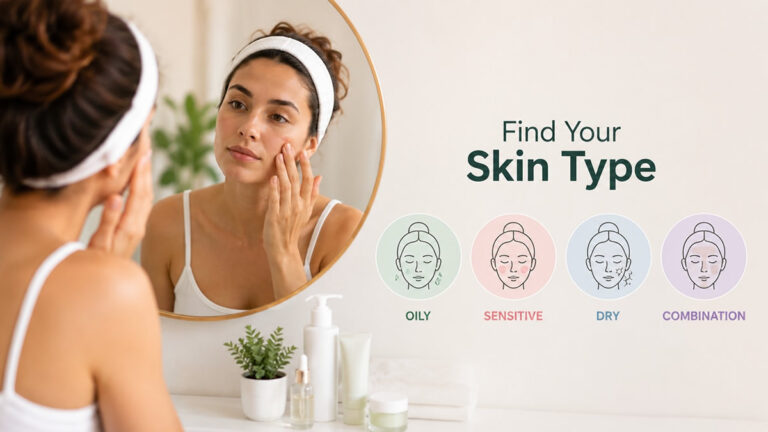
- Identify Your Baseline First: Not sure whether your skin leans oily, dry, or sensitive? Follow our simple step-by-step guide on How to Identify Your Real Skin Type at Home using the bare-face testing method.
Whether you prefer a protective mineral shield or an invisible chemical gel, applying broad-spectrum SPF 30 or higher every morning ensures long-term skin health, radiance, and protection.
Frequently Asked Questions (FAQs)
Q1: Can I mix my physical and chemical sunscreens?
No. Mixing sunscreens in your hand can dilute the active SPF filters and compromise UV protection. Layer them separately if desired, or choose a hybrid formula.
Q2: Is physical sunscreen better for hyperpigmentation and dark spots?
Yes. Mineral sunscreens containing zinc oxide and iron oxides (found in tinted sunscreens) block visible blue light and heat, which helps prevent melasma and dark spots from worsening.
Q3: How much sunscreen should I apply to my face?
Use the two-finger rule: squeeze two full strips of sunscreen onto your index and middle fingers. This provides the exact coverage needed for your face and neck.
Q4: Do I need sunscreen if my moisturiser or makeup already has SPF 30?
While SPF in makeup is a nice bonus, most people do not apply enough makeup to achieve the full SPF rating on the bottle. It is always best to apply a dedicated sunscreen underneath your makeup.
Disclaimer: The content on The Glow with Grace is for educational and informational purposes only. It is not intended as a substitute for professional medical or dermatological advice.
Explore more skincare guides on The Glow with Grace homepage.