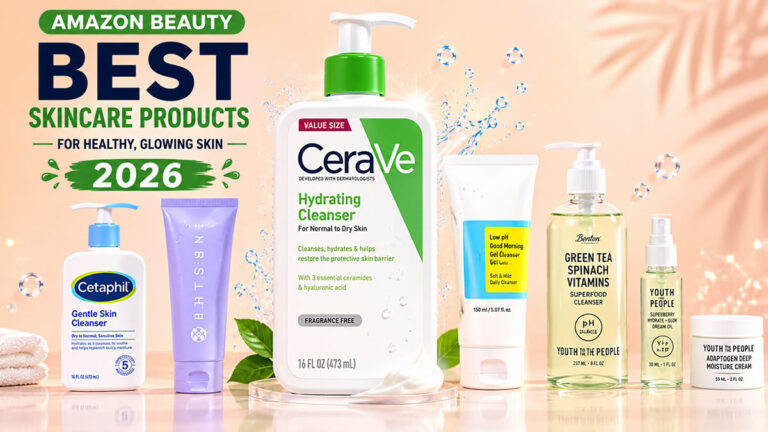

How to Master Your Skincare Layering Order Morning and Night
Written by Grace Reyes — Independent skincare researcher who reads ingredient labels obsessively so you don’t have to.
Investing in high-quality products is only half the battle mastering the correct skincare layering order morning and night is what delivers actual results. If you apply them in the wrong sequence, you risk blocking active ingredients from penetrating the skin, causing product pilling, or even irritating your skin barrier.
The universal rule of thumb for skincare layering is straightforward: apply products from the thinnest consistency to the thickest. Lightweight, water-based formulas go first so they can absorb deeply, followed by heavier, oil-based products that seal everything in.
The Morning Skincare Layering Order: Protect and Prevent
Your daytime routine should focus on defence. During the day, your skin faces environmental stressors like ultraviolet (UV) radiation, urban pollution, and free radicals. The goal of your AM routine is hydration and protection.
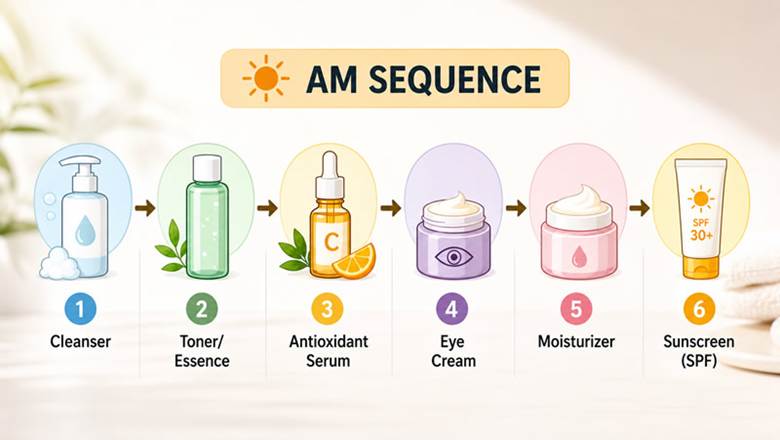
Step 1: Gentle Cleanser
Start your morning by removing nighttime oils, dead skin cells, and any residual products. Opt for a gentle, hydrating gel or foam cleanser that cleanses without stripping your skin barrier explore our top picks for Best Face Wash for Sensitive Skin in the USA 2026 – Top 10 Gentle Cleansers.
Step 2: Hydrating Toner or Essence (Optional)
Toners prepare your skin to absorb subsequent treatments. Modern toners focus on hydration, balancing your skin’s pH levels, and prepping the skin surface. Pat a few drops into damp skin using your hands rather than a cotton pad to minimise product waste.
Step 3: Vitamin C or Antioxidant Serum
Serums deliver concentrated active ingredients directly into the skin. Morning is the ideal time to apply a Vitamin C serum. Antioxidants neutralise free radicals caused by pollution and sun exposure while brightening dull skin tone over time.
Rule of Thumb: Always wait 30 to 60 seconds after applying your serum to allow it to fully absorb before moving to the next layer.
Step 4: Eye Cream
The delicate skin around your eyes is thinner and more prone to premature ageing. Apply a pea-sized amount of lightweight eye cream using your ring finger, gently tapping along the orbital bone.
Step 5: Moisturiser
Moisturiser locks in hydration and supports your natural skin barrier. Choose a lightweight gel-cream for oily or combination skin, or a richer cream if you lean toward dry skin.
Step 6: Broad-Spectrum Sunscreen (SPF 30+)
Sunscreen is the non-negotiable final step of your morning routine. Apply a generous amount of broad-spectrum SPF 30 or higher as the last barrier. For daily wear under makeup, opt for lightweight formulas like these Best Sunscreens Without White Cast for Daily Use (10 Picks for 2026).
The Nighttime Skincare Layering Order: Repair and Restore
While you sleep, your skin switches into cellular repair mode. Your evening routine should prioritise deep cleansing, targeted repair treatments, and rich moisture recovery.
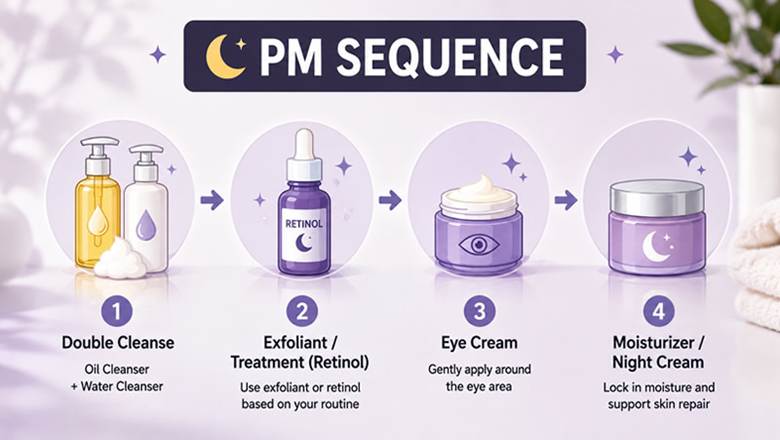
Step 1: Double Cleanse
Throughout the day, long-wear makeup, water-resistant sunscreen, excess sebum, and airborne pollutants accumulate on your face. A single wash is rarely enough.
- First Wash: Use an oil-based cleanser or cleansing balm to dissolve makeup and SPF.
- Second Wash: Follow up with a water-based gentle cleanser to purify pores and wash away remaining residue.
Step 2: Targeted Treatment or Exfoliant
Nighttime is when your skin can handle active ingredients that increase sensitivity to sunlight. Rotate your treatments based on your skin’s tolerance:
- Exfoliating Acids (AHA/BHA): Use 1 to 2 nights a week to clear clogged pores and smooth texture.
- Retinoids / Retinol: Use on alternate nights to boost collagen production and accelerate cell turnover.
Caution: Do not mix strong exfoliating acids (like Glycolic or Salicylic Acid) with Retinol in the same evening session, as this can severely damage your moisture barrier.
Step 3: Hydrating Eye Cream
Nighttime eye creams can be slightly richer than daytime formulas. Look for ingredients like peptides or hyaluronic acid to repair fine lines and maintain moisture overnight.
Step 4: Rich Night Moisturiser or Barrier Cream
Finish your evening routine with a nourishing moisturiser or night cream. Look for formulas packed with ceramides, fatty acids, or niacinamide to repair daily wear and tear. Check out our guide on Best Fragrance-Free Moisturisers for Sensitive Skin in 2026 if you are repairing a compromised barrier.
Quick Reference Summary Table
| Step | Morning Routine (Protection) | Night Routine (Repair) |
| 1. Cleanse | Gentle Water-Based Cleanser | Double Cleanse (Oil + Water Cleanser) |
| 2. Prep | Hydrating Toner / Essence | Hydrating Toner (Optional) |
| 3. Treat | Antioxidant Serum (Vitamin C) | Active Treatment (Retinol or AHA/BHA) |
| 4. Target | Lightweight Eye Cream | Nourishing Eye Cream |
| 5. Hydrate | Daily Lightweight Moisturiser | Deep Repair Night Cream / Barrier Cream |
| 6. Protect | Broad-Spectrum Sunscreen (SPF 30+) | Not Applicable |
Essential Layering Rules to Remember
- Thinnest to Thickest: Always apply liquid formulas before heavy creams and oils.
- Damp vs. Dry Application: Apply hydrating products (like Hyaluronic Acid) to slightly damp skin to trap moisture. Apply active treatments (like Retinol) to completely dry skin to reduce irritation.
- Patience Pays Off: Allow 1 to 2 minutes between active steps, so ingredients penetrate effectively without pilling.
Frequently Asked Questions (FAQs)
1. Should I wait between applying each skincare product?
Yes, waiting 30 to 60 seconds between steps ensures proper product absorption and prevents annoying pilling or irritation.
2. Can I use Vitamin C and Retinol together in the same routine?
No, keep them separate by applying Vitamin C in the morning for sun protection and Retinol at night for cellular repair.
3. Do I really need to double cleanse if I don’t wear makeup?
Yes, because an oil cleanser is still necessary to break down stubborn water-resistant sunscreen and daily excess sebum.
4. Is a toner necessary for every skincare routine?
It is optional, but a hydrating toner helps balance your skin’s pH and boosts the absorption of your active serums.
5. Should I apply Hyaluronic Acid to wet or dry skin?
Always apply it to damp skin so the molecule can pull that surface moisture directly into your skin barrier.
Disclaimer: The content on The Glow with Grace is for educational and informational purposes only. It is not intended as a substitute for professional medical or dermatological advice.
Explore more skincare guides on The Glow with Grace homepage.